Keeping memories
Photo Gratitude Journalling: How to Keep the Moments You Don’t Have Words For
The ordinary pictures on your phone have stories. Give those stories a place to live.
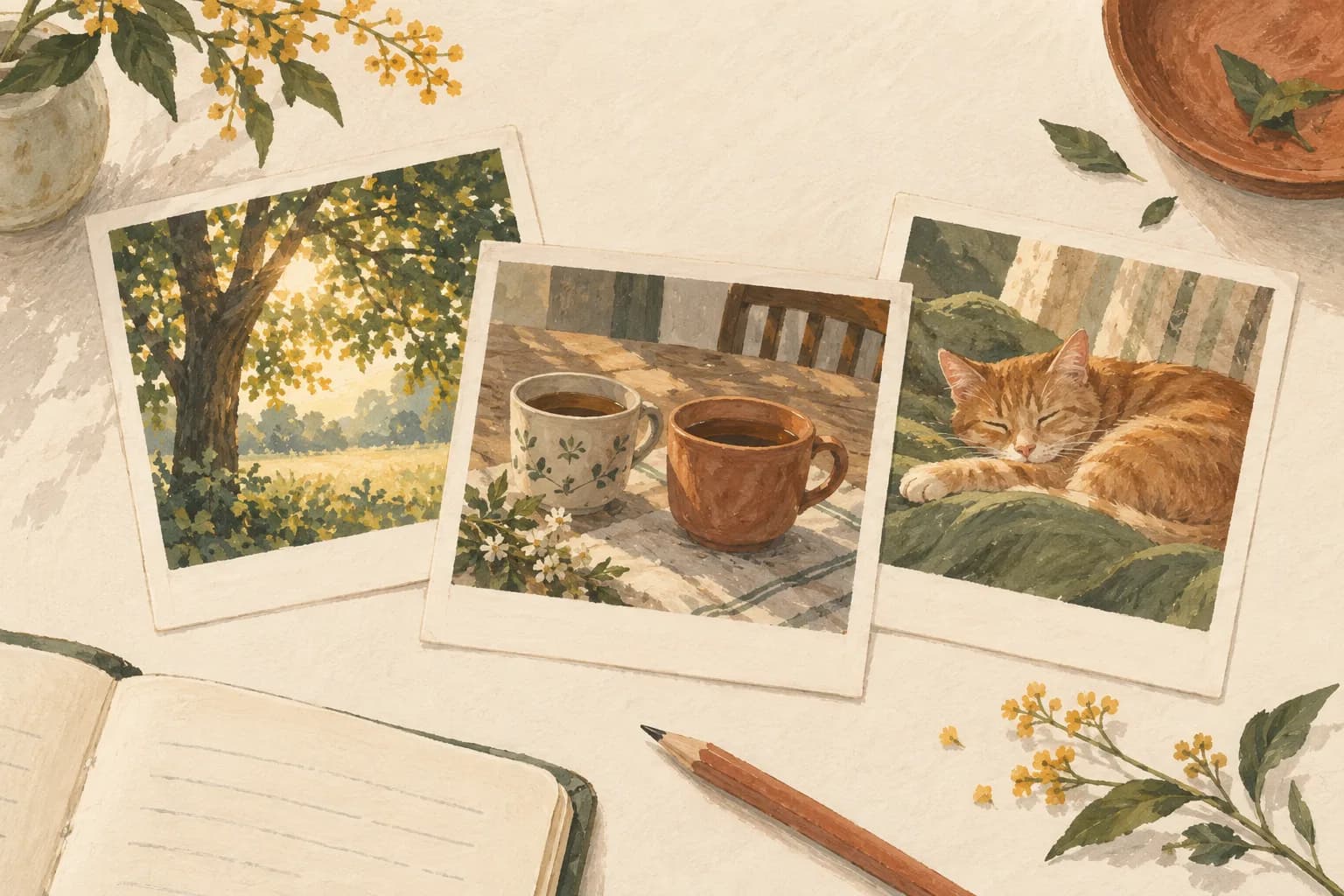
In this story
There’s probably a photograph on your phone that means more to you than it would to anyone else.
A kitchen table. A dog in a patch of sunlight. Two mugs beside a sink. A badly lit picture of dinner.
Someone else might scroll past it. You know what happened just before it was taken, who was there, or why an ordinary scene felt worth keeping.
Photo gratitude journalling gives that context a place to live.
You keep a picture and add a few words about what you appreciated. Over time, the journal holds both what the moment looked like and what it meant to you.
The picture doesn’t have to be beautiful
It’s easy to bring the habits of social media into a private journal: choosing the flattering angle, removing the clutter, waiting for better light.
You don’t need to do any of that here.
A useful journal photograph might show:
- The half-finished puzzle you worked on with someone.
- Your shoes after a walk you almost skipped.
- A meal a friend dropped off.
- The view from a familiar bus stop.
- An untidy table after everyone has gone home.
The image only needs to help you remember.
A photograph of an empty chair might mean very little by itself. Add “Dad stayed for a second cup of tea today,” and it becomes a record of something specific.
Start with a photo you already have
You don’t need a new photography habit to begin.
Open your camera roll and look at the last few days. Find a picture that makes you pause—not necessarily your favourite picture, just one with a memory attached.
Then ask:
What do I know about this photograph that someone else wouldn’t?
That question usually produces a more useful caption than describing what’s visible.
For a photograph of lunch, “A bowl of soup” adds little. This adds more:
I made enough soup for two days. Coming home hungry and finding dinner already sorted felt like a gift from yesterday’s me.
For a picture of a park:
We took the longer route because neither of us wanted to go home yet. I’m glad we had nowhere urgent to be.
These are fictional examples, but the approach works with your own ordinary photographs.
A caption that will still mean something later
You can build an entry from three details:
- What happened?
- What did you appreciate?
- What might you forget?
You don’t need to answer all three every time. They’re especially useful when a photo feels meaningful now, but you suspect the reason will fade.
Imagine a picture of a plate with one uneven slice of cake left on it.
You could write:
My niece insisted on cutting everyone’s cake herself. The slices were wildly different sizes. She gave me the biggest one and whispered that it was because I’d helped her with the candles.
Months later, the plate alone might not bring that back. The words will help.
Names, places, little remarks, and the reason you laughed are often more valuable than a polished description.
What if the moment wasn’t something you could photograph?
Many things worth appreciating are difficult or inappropriate to capture: a private conversation, someone being patient, a moment of relief.
You can use a photograph connected to the experience without photographing the experience itself.
After a supportive phone call, you might take a picture of the window you were looking through. After a difficult appointment, it might be the tea you had when you got home.
Write down the connection:
This was the view while we talked. I appreciated being able to say I was worried without having to make it sound smaller.
Or skip the photo. A photo journal can contain text-only entries. Consistency of format matters less than keeping what you want to remember.
Let the moment happen before deciding to document it
You don’t need evidence of every good thing.
Sometimes taking out your phone would interrupt what you’re enjoying. Sometimes a camera would make someone self-conscious. Sometimes you simply forget.
Leave those moments alone while they’re happening. You can write about them afterwards.
A useful personal rule is:
Take a photo when it feels natural. Write later when it doesn’t.
That leaves room for both noticing and participating.
Make room for privacy
A private journal may still contain details about other people.
Before adding a photograph, check what’s in the frame. An address, school badge, work screen, ticket, or medical document can reveal more than you intended. Crop it out or choose another picture.
Be particularly thoughtful about vulnerable moments. Someone being upset, unwell, or asleep may be meaningful to you without being something they would want photographed or stored.
You can preserve your appreciation in words instead:
They trusted me enough to tell me what was really going on. I’m grateful we had that conversation.
If you later export or share a journal, review the photographs and captions again. Sharing a page can reveal context that wasn’t obvious in the picture alone.
Look back at the ordinary photographs
After you have a handful of entries, spend a few minutes looking through them.
Which moments are you happiest you kept? Which captions bring back something you’d forgotten? Are there photographs that matter more now than when you took them?
You may discover that the pictures you value most aren’t the special occasions. They may be the details of a particular season of life: a familiar room, someone’s handwriting, the way your pet waited by the door.
That can guide what you choose to keep next.
To try photo journalling, open your journal, add one photograph, and finish this sentence:
I want to remember this because…
You don’t need to turn your day into a photo shoot. One picture with a few honest words is enough to begin.
A MOMENT FOR YOU
What’s the story behind a photo you love?
Your own words, at your own pace.
Open your journal
A little gratitude, in two minutes
One moment, a few words, and a routine small enough to fit an ordinary day.
Read the story
Seven days of noticing the little things
Seven small invitations to notice your life. No streaks to protect, no catching up to do.
Read the story
Paper or digital? Make it yours
An honest look at notebooks and apps, and how to find the format that fits your days.
Read the story